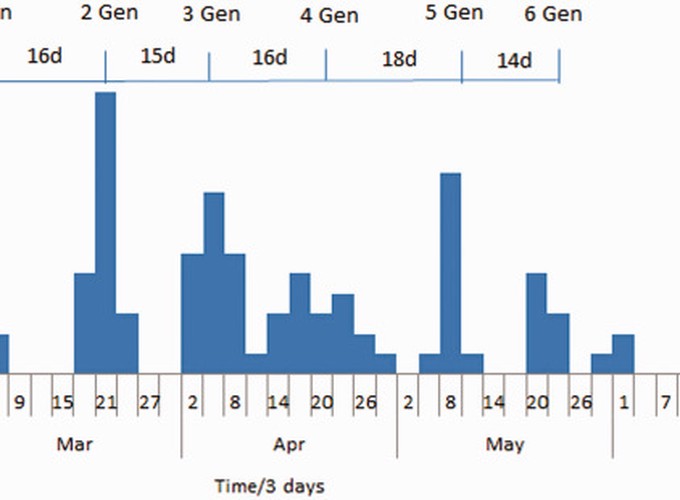
OBJECTIVES: To describe the epidemiological features of a school varicella outbreak in Dongguan City, China, to identify the reasons underlying persistent spread, and to assess the effectiveness of the varicella vaccine. METHODS: We identified all cases during the outbreak. We described the outbreak epidemic course and examined the influence of the following variables on the outbreak: sleeping in the dormitory, eating in school, taking school transportation, hand-washing habits, morning examinations, and effectiveness of case isolation. Logistic regression was used to estimate the odds ratio and 95% confidence interval (CI) of contracting varicella. RESULTS: A total of 92 varicella cases were reported, accounting for 5.53% (92/1663) of all students. Among cases, 64.13% (59/92) were vaccinated. The outbreak lasted for 93 days and occurred in six generations. Vaccination coverage was between 78.05% and 85.67%. The varicella vaccine was effective in 56.63% of recipients (95% CI: 35.49-70.84%). Vaccine effectiveness significantly decreased after 4-6 years. CONCLUSIONS: The varicella vaccine was unable to prevent virus spread even with high vaccination coverage. Delayed and inefficient isolation of cases was the primary cause of the persistent outbreak.